
A Mother Took Her 8-Year-Old Son with Leukemia to a Basketball Game – But What the Announcer Said Made Her Drop to Her Knees
Oct 06, 2026


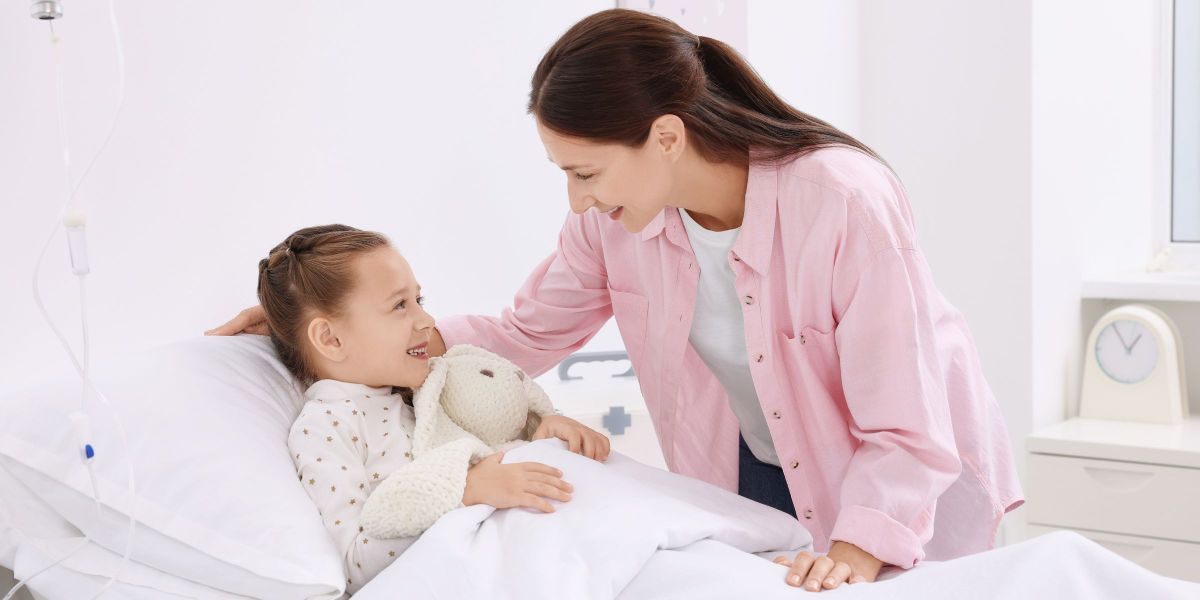
Four years ago, a stranger paid my daughter's $140,000 surgery bill and disappeared without a name. Last week, he found me in a park and said he owed me. What he told me next sent me back to a moment I'd completely forgotten and changed everything I understood about that day.
My husband died from cancer when my daughter, Jenny, was four.
Two years after that, her heart condition, the one the doctors had been monitoring carefully since birth, decided it was done being monitored.
She was seven years old, and she collapsed at recess. By the time the ambulance rushed her to the hospital, the cardiologist was using words like "urgent" and "can't wait."
She was seven years old, and she collapsed at recess.
The surgery would cost $140,000. Insurance denied us three times. The third letter arrived at 2 a.m., and I read it at the kitchen table by the light above the stove.
I remember sitting there, thinking about how strange it was that a number on a page could outrank a mother. That a denial code could weigh more than a seven-year-old's heartbeat.
So I called the realtor the next morning. I put the house on the market. It was the only asset I had left that was worth anything, and I told myself that Jenny and I could figure out the rest later.
The surgery would cost $140,000.
I drove to the hospital that afternoon to arrange the deposit. The billing clerk typed my name into the system and paused. She frowned at the screen, then slowly turned the monitor toward me.
"Ma'am, your daughter's balance is zero."
I told her there had to be a mistake. The woman shook her head and pointed to a line on the screen: wire transfer, cleared that morning, full amount. Anonymous.
I don't remember the floor. I remember the tile being cold against my cheek, and I remember a nurse crouching beside me, saying my name. I remember thinking that I needed to call the realtor and take the house off the market.
Wire transfer, cleared that morning, full amount. Anonymous.
Jenny had the surgery three days later.
She came through it fine. Better than fine, the surgeon used the word "textbook," and I cried so hard in the hallway that a volunteer came and sat with me for 20 minutes.
***
For four years after that, not a single day passed that I didn't wonder about the savior who had saved my child's life.
Jenny turned 11 last March. She's all elbows and opinions now, plays soccer twice a week, reads above her grade level, and argues about everything with confident ease.
Not a single day passed when I didn't wonder about the savior who had saved my child's life.
I rebuilt our life. The house remained ours. I went back to remote work. I made peace, or something close to peace, without knowing who to thank for saving my daughter.
Until last Monday.
We were in the park late in the afternoon. Jenny was upside down on the monkey bars, legs hooked over the top bar, and her hair brushing the wood chips below. She was absolutely delighted.
I rebuilt our life.
Suddenly, a black sedan pulled up to the curb.
A man stepped out in a tailored navy suit, polished shoes, and an unhurried walk.
He walked straight toward me, and something about the directness of it made me stand up and step slightly in front of Jenny without thinking.
"Laurel?"
He took off his sunglasses. His eyes were calm. He introduced himself as Brad and said he recognized me the moment he saw me with Jenny.
But I had no idea who he was.
He introduced himself as Brad.
"Do I know you?" I asked.
"It was me," he said. "I paid the hospital bill."
My heart took a hard, single beat and then seemed to hold.
"What? Who are you? Why would you do that?"
He glanced at Jenny, still upside down, oblivious to all of it, and then back at me.
"I owed you this, Laurel. You saved someone once. You probably don't even remember."
"I paid the hospital bill."
His phone buzzed. He checked it.
"I'm late," he said. "I'm sorry. I hope we meet again." He gave me a small, genuine smile and walked back to the car.
"Wait, how do I find you?"
He didn't answer. The sedan pulled away, and I stood on that path with my heart racing.
***
I'm not a person who lets things go.
I ran the name Brad through every online search I could think of: professional networks, charity registries, and local business filings.
I'm not a person who lets things go.
On the third night, I found a three-year-old article about a foundation that had quietly funded emergency pediatric surgeries across several hospitals in the region.
The foundation's registered agent was listed as a man named Brad. The address matched a company headquarters on the east side of the city.
I kept digging. I found a photo, published in a local hospital newsletter four years ago, taken the morning of Jenny's surgery. It was a wide shot of the lobby, used for a piece about volunteer programs.
I nearly scrolled past it. Then I looked at the background.
I nearly scrolled past it.
On the left side of the frame, barely in focus, a man in a dark suit was sitting in one of the waiting area chairs with his hands resting on his knees.
On the right, at the billing counter, a woman was bent over the desk with her forehead on her arms.
That woman was me.
Brad had been there. He had watched the whole thing, and then he'd walked out and wired $140,000 before lunchtime.
Brad had been there.
After leaving Jenny at school the next morning, I requested the payment documentation from the hospital's billing department. It took two days and a formal records request, but they confirmed it: the anonymous wire came from a trust account created the same morning as Jenny's surgery.
One authorized signer. Funds sourced from a liquidated investment account.
The trust was named after a woman I didn't recognize. Brad was the only name on the authorization.
Why would he help me? Who was this man? And why did he think he owed me anything?
I needed answers.
Why would he help me?
***
Brad's company occupied the top two floors of a glass building when I drove there immediately. The receptionist called up to his office and came back looking mildly surprised.
"He said to send you up."
Brad was standing when I walked in, jacket off, sleeves rolled to the elbows, and he had the expression of a man who had been expecting this visit and had decided to be glad it finally came.
"You found me!"
"You weren't that hard to find," I replied, and set the hospital documents on his desk.
Brad's company occupied the top two floors of a glass building.
He looked at them without touching them. Then he looked at me.
"Will you come somewhere with me, Laurel? I'll explain everything. But I need to show you something first."
Every sensible instinct I had said to stay in that office, in a building full of people, and demand answers across a desk like a normal person.
"Okay," I agreed. Because four years is a long time to wait for an explanation, and I was done waiting.
"Will you come somewhere with me, Laurel?"
Brad drove us to a cemetery on the north edge of the city. A quiet, well-kept place that felt like it existed slightly outside of ordinary time.
He stopped beside a grave with a small granite marker and stood there for a moment with his hands in his pockets.
"My father. He died last year."
Brad told me that four years ago, his mother had been admitted to the hospital with a cardiac episode. His father visited every day. Brad came as often as he could between meetings.
He'd watched me in the waiting area.
And during that week, he'd watched me in the waiting area, not because he was paying close attention, but because I was hard to miss.
"You talked to people," he revealed. "Families who were scared and sitting in those plastic chairs at 10 at night. You'd sit down next to them and just talk. You cared."
"I barely remember that week."
"My father remembered it. And he remembered you from somewhere else, too."
He told me the rest slowly, as if he'd been carrying it for a long time and was being careful not to drop it.
"He remembered you from somewhere else."
Almost a year before Jenny's surgery, Brad's daughter, Maisie, had been riding her bike at the local park when a car coming out of a side lot didn't see her. Someone pulled her out of the way at the last second.
That someone had refused any kind of thanks, waved off his father's offered reward, and walked away before anyone got her name.
"It was you, Laurel," Brad added. "My father tried to find you for months. He never could. And then he saw you in a hospital waiting room."
Someone pulled her out of the way at the last second.
The memory arrived slowly at first, and then all at once: a little girl, a red bike, and the sudden, hard sound of tires. I'd acted before I'd thought about it.
The girl's grandfather had been shaking when I handed the girl back to him, and I remembered being uncomfortable with his gratitude and just wanting to leave.
And then Jenny had gotten sick, and that whole year had compressed into something I could barely see.
"I didn't remember," I told Brad. "I genuinely didn't remember."
He nodded like that was exactly what he'd expected me to say.
I remembered being uncomfortable with his gratitude.
"I was with my father when he saw you at the hospital billing counter. He recognized you immediately. He told me you were the woman who had saved my daughter. Then he looked at me and said, 'Find out what she needs and fix it.' I promised him I would."
"So you paid $140,000 because your father recognized me."
"Yes, I did. Because the day someone saves your child, you don't just say thank you and move on. You protect their child, too."
Brad looked down at his father's grave. "He believed that kindness always finds its way back."
I stood beside that grave for a long time, processing everything.
'Find out what she needs and fix it.'
I thought about Maisie, a little girl I'd handed back to her grandfather and immediately forgotten.
I remembered the realtor's voicemail I'd left that morning to take the house off the market. I remembered Jenny's surgeon using the word "textbook" and how I'd crumpled in that hallway.
And I pictured Brad's father sitting in a hospital waiting room in the worst week of his own life, recognizing a stranger and deciding to help her.
"He sounds like he was remarkable," I whispered.
"My dad was the best person I knew. Losing him was..." Brad paused. "He would have liked this. Knowing you finally know."
"My dad was the best person I knew."
I learned the rest on the drive back. Brad's wife had died in childbirth. He'd been raising his daughter alone since the beginning, same as me, just from a different kind of loss.
We sat in the parking lot outside my car for almost an hour, talking the way people do when they've been holding a conversation in reserve for four years and it finally has somewhere to go.
"Thank you," I said when I got out.
"Thank my father," Brad said, smiling. "He started it."
I learned the rest on the drive back.
That was a week ago. We've had dinner twice. The girls met on Saturday at the park.
Jenny immediately tried to teach Maisie a handstand, and Maisie immediately fell over laughing. And within 20 minutes, they were running around together as if they'd known each other for years.
I watched the girls from the bench and thought about how quietly things connect. How a split-second decision at a park can travel forward four years and arrive back at you in the form of a little girl doing handstands with your daughter.
They were running around together as if they'd known each other for years.
Brad sat down beside me on the bench and didn't say anything for a while, which I've learned is one of his better qualities.
I don't know what this is yet. I'm not in a hurry to name it.
But I know that our girls are laughing, and Brad's father's grave has fresh flowers on it, and somewhere in the middle of all of it, the kindness has found its way back.
Just like he said it would.
Kindness has found its way back.
Oct 06, 2026

Sep 22, 2026

Oct 08, 2026

Sep 28, 2026

Jul 07, 2026

Jul 09, 2026

Oct 14, 2026

Sep 24, 2026

Sep 04, 2026

Sep 16, 2026

Jul 31, 2026